Key takeaways
- A calendar year is a weak predictor. The tank in the closet is the evidence.
- Humidity, salt air, and a quiet anode decide more than the sticker date.
- Rusty water at the hot tap and a wet base are late signs, not maintenance.
- We do not quote a lifespan number. We quote the heater we are looking at.
Stop counting birthdays. Look at the steel.
People want a year count. Florida does not cooperate. A tank in a dry inland closet and a tank in a salty island chase age on different clocks, even if the stickers match.
We look at rust at the base, the color of the hot water, the anode if the heater is still worth opening, and whether the pan has been wet before. That is the sign list we actually use.
If the shell is already open, the remaining life is zero. That visit is on the replacement page.
What shortens a tank here
| Local condition | What it does | What you might notice |
|---|---|---|
| Humid garage air | Hides early drips as sweat, then rusts fittings | A jacket that is always damp |
| Salt air near the island | Attacks nipples, valves, and the pan | Green or crusty threads |
| Sediment in the bottom | Bakes, rumbles, and steals capacity | Popping when the heater runs |
| A spent anode | The glass lining loses its backup | Rusty hot water while cold stays clear |
| A capped relief valve | Pressure has nowhere to go | The failure is sudden, not gradual |
None of those rows comes with a guaranteed year. They tell us whether this heater is a repair or a replacement today.
Island chase versus inland garage
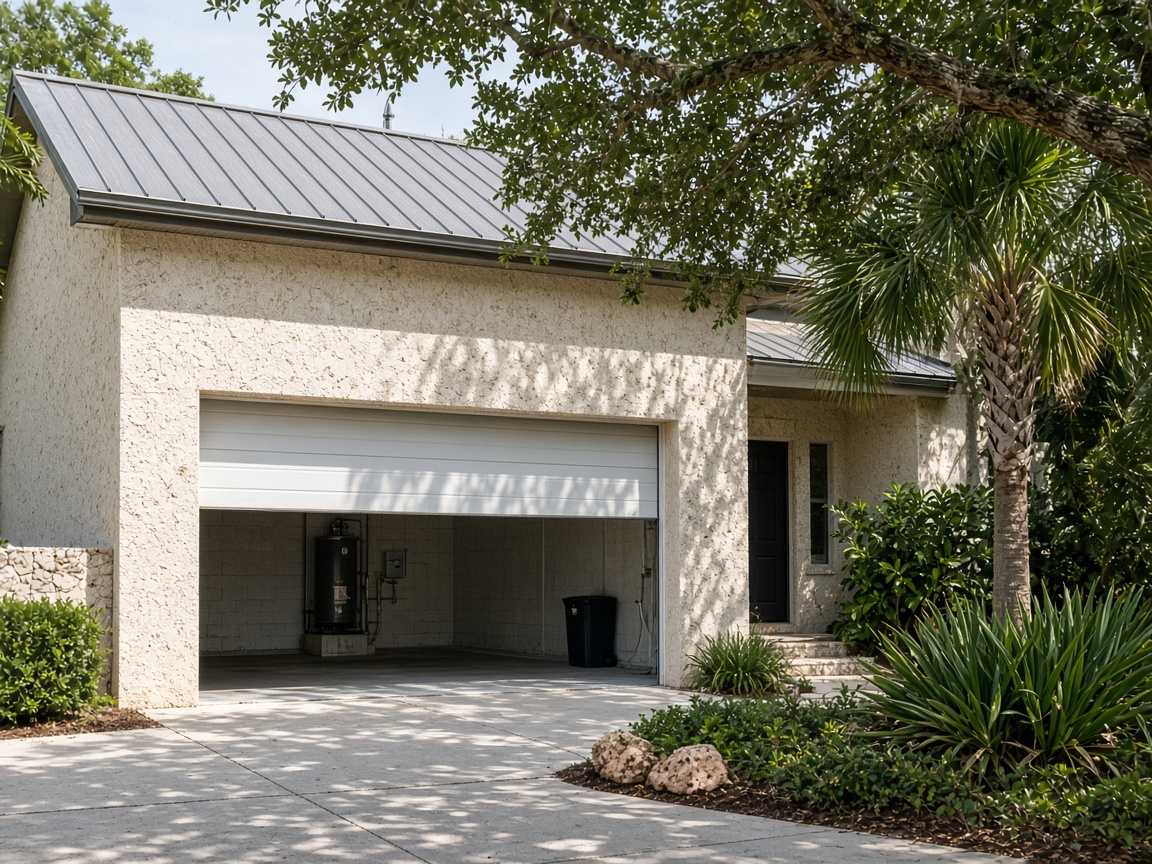
South Beach and parts of Wabasso put heaters in tight chases with marine air. Fittings crust. Pans rust from the outside even when the tank is sound.
Florida Ridge and West Vero Corridor garages are humid but less salty. The failure we see there is more often the bottom of the steel and a pan nobody has looked at.
The bottom leak article is the inland pattern. Crusty valves show up more in the island notes on our relief valve page.
Maintenance that is real, and maintenance that is theater
Knowing where the cold inlet is, keeping the relief pipe open, and not ignoring a pan that refills: that is useful. Buying a flush kit and never using it does not add years by magic.
EPA WaterSense showerheads and bath faucets cut how much hot water a shower asks for. That does not seal a rust hole. It does mean a smaller demand on a tank that is still healthy.
When we are in the closet we will say if the heater is worth keeping. You approve any work before we start. We will not invent a remaining-year number to push a sale.
What we can see without a lab: crust on the nipples, a soft pan, a relief pipe with a plug, rusty water that clears on the cold side, and rumbling that matches sediment. What we cannot see: the day it will open. Anyone who gives you that day is guessing.
If the heater is still sound and you want it kept, we talk about the anode and the temperature setting. Hotter is not safer. Hotter is more scale and more scald risk at the tap. A moderate setting and a working relief valve beat a new sticker date.
If the heater is not sound, waiting for a convenient week is how a closet becomes a garage flood. We will say that plainly. The choice to wait is still yours, with the wet spot as the evidence.
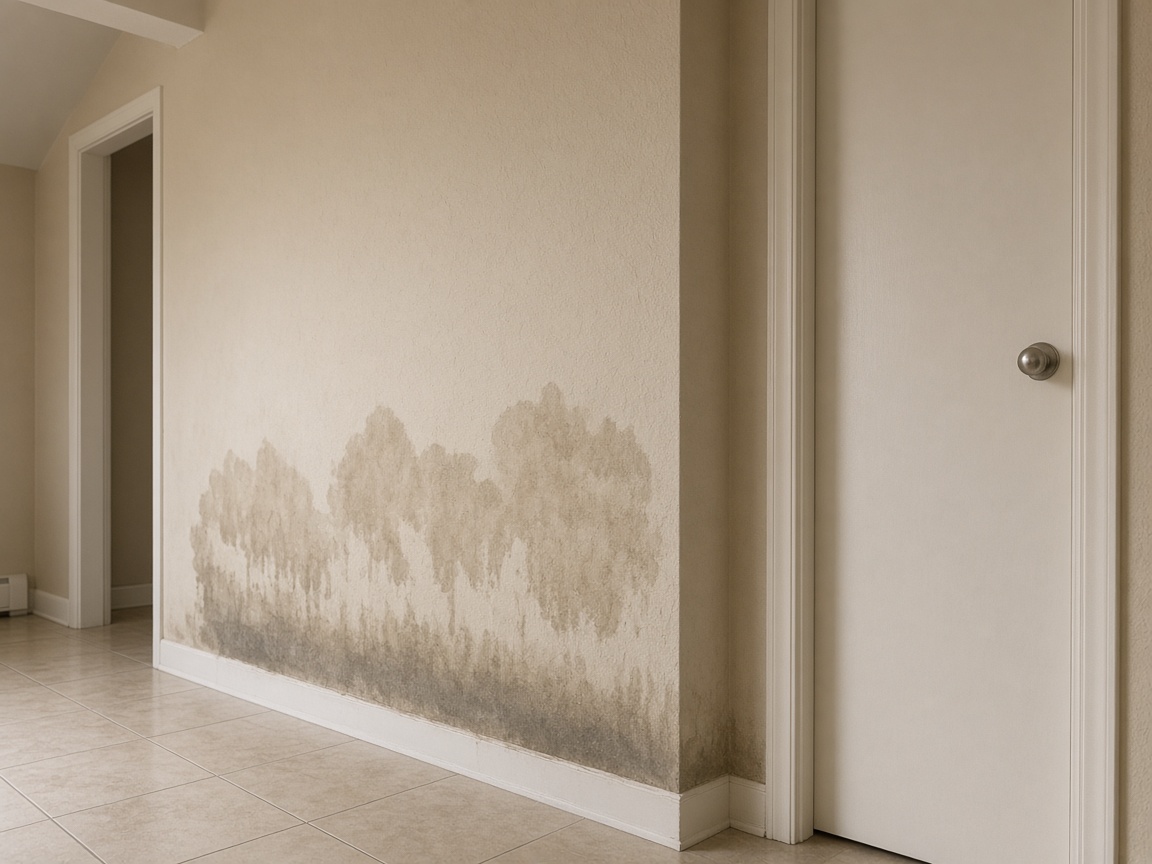
Humidity is the local constant. A tank that looks fine in January can sweat through August and hide a real drip in that film. The wipe test is the whole trick. One dry towel, one seam, one heat cycle. If you do that twice in a summer and the towel stays dry, you have a sweaty tank, not a failing one.
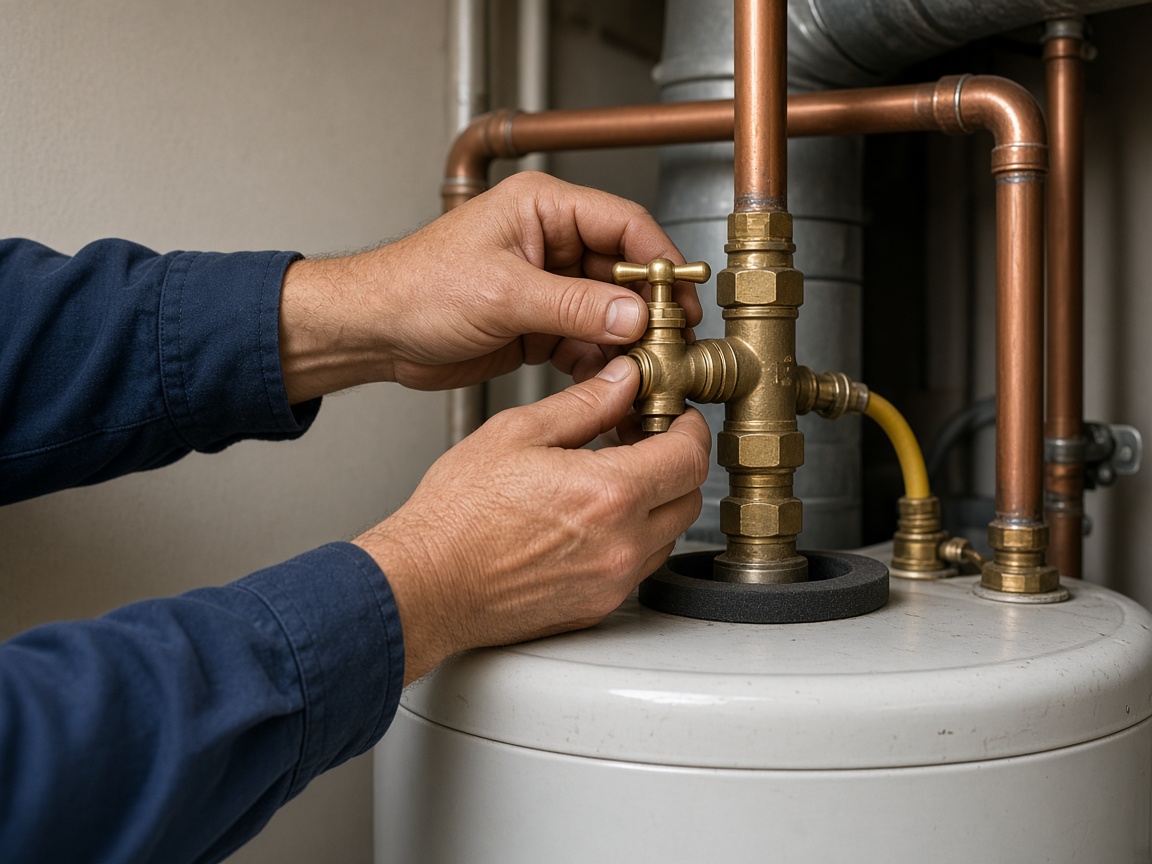
Salt is the other constant east of the river. Fittings that look furry are losing metal from the outside. The tank wall can still be fine. We replace the fitting and leave the heater when that is the truth. We do not use crust on a nipple as an excuse to sell a tank.
Write nothing down about years. Write down rust, noise, rusty hot water, and whether the pan has been wet. Those four notes are the history we can use. A manufacture date is a footnote. The steel in the closet outranks the sticker every time.
The anode is the one maintenance part worth naming. It is a rod inside the tank that corrodes so the steel corrodes less. When it is gone, the tank is on its own. We can check it when the heater is still worth keeping. We will not pull an anode out of a tank that is already leaking at the base. That tank is done, and opening it only makes a wet closet wetter.
Flushing sediment is useful on a heater that rumbles and still holds water. It is useless as a cure for rusty water that keeps coming. Rust in the stream is the lining and the steel, not a scoop of sand you can hose out.
If you want a plan, the plan is simple. Watch the pan. Keep the relief pipe open. Call when the base is wet or the hot side turns brown. Those are actions. A year count on a magnet is not a plan.
Water on the floor?
Call with the street and the fuel type. You approve the price before we start.
Call (772) 555-0140Questions
Is there a normal lifespan in Florida?
We do not publish one. Humidity, salt, water quality, and whether the relief valve was left alone change the answer house by house. The tank in front of us is the answer. Bring us the wet spot, the water color, and the noise. Leave the birthday math at home.
Does a rumbling heater mean it is at the end?
It means sediment. Some of those tanks are still sound. Some are thin at the bottom. We do not condemn it from the noise alone. We look at the base and the water color before we talk about replacement.
Should I replace it because the sticker is old and it has not leaked?
Only if you want to, after you see the condition. Age on a sticker is context. A dry, quiet, clear-water heater is not an emergency. If you want it changed for your own reasons, we will still show you a dry base first.
Will a tankless last longer here?
It fails differently. Scale and vent parts, not a rusted shell. Read the tank versus tankless guide before you treat it as a longer calendar. Longer is the wrong word. Different failures, different closet, different price.
Sources
Need help now?
Want this heater looked at?
Have the street ready. You approve the price before we start.