Key takeaways
- The relief valve opens because the tank is too hot or the pressure is too high.
- A drip from the pipe coming off that valve is a warning, not a nuisance to plug.
- Never cap, plug, or valve off the relief line.
- We check temperature, the valve, and house pressure before we call it a bad valve.
The valve is doing the job you hope it never does
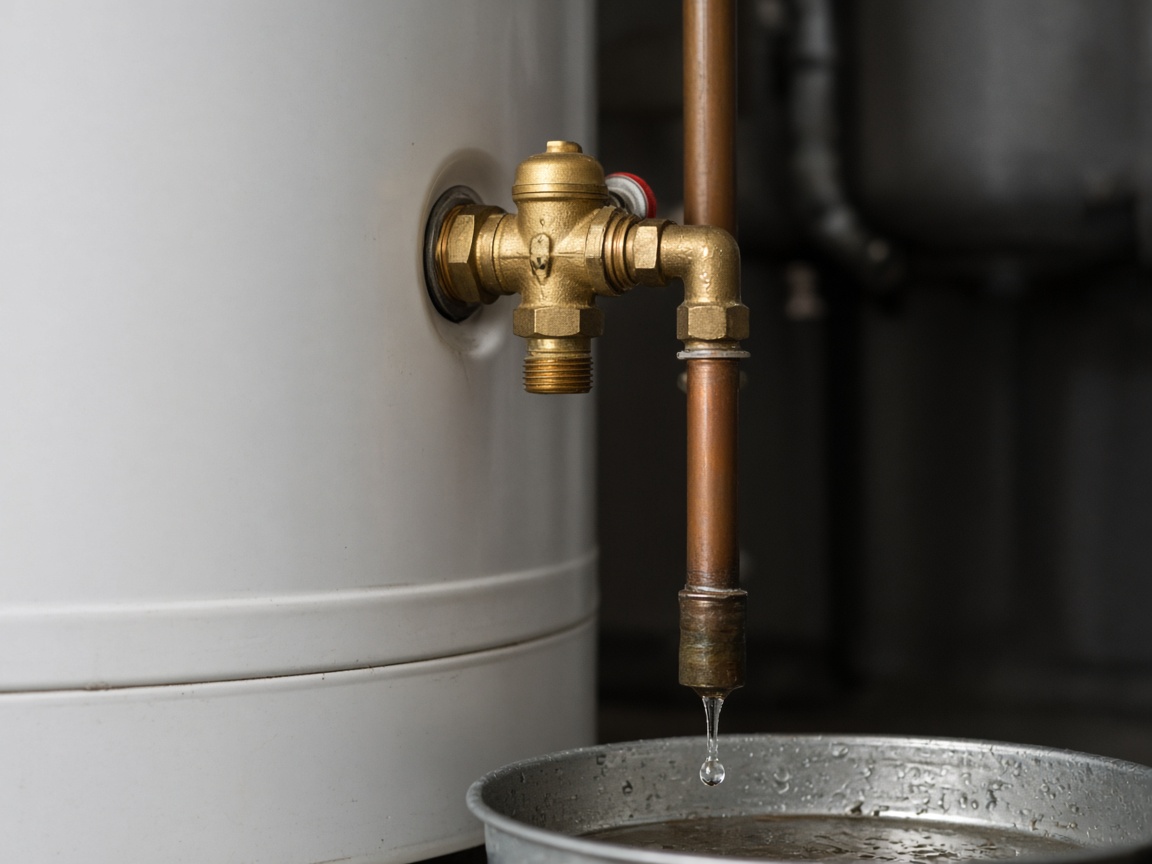
The temperature and pressure relief valve sits on the top or side of the tank. A pipe should run from it down toward the floor or to a safe drain. When the valve weeps, that pipe drips.
People cap it because the drip stains the pan. That cap removes the only automatic way for the tank to dump pressure. The next step is not a tidy closet. It is a burst water heater.
If the pipe is already running, not dripping, treat it as active and use the shutoff order.
Drip versus discharge
| What the pipe does | Likely cause | What we check |
|---|---|---|
| A drop now and then after a long recovery | Heat expansion in a closed house | Valve, setting, expansion path |
| A steady drip while the heater fires | Valve wear, high heat, or high pressure | Thermostat and incoming pressure |
| A stream | The valve is open or the tank is over limit | Shutdown first, then the cause |
| Wet pan but the relief pipe is dry | Not this valve | Shell, nipples, drain |
Replacing the valve without finding the cause just gives you a new valve that drips.
Heat, pressure, and a closed plumbing system
When the heater fires, water expands. If the house has a check valve or a pressure reducing valve and nowhere for that expansion to go, pressure climbs. The relief valve is the outlet.
A thermostat stuck on heat does the same thing from the temperature side. Electric heaters show this as a valve that weeps every recovery. Gas heaters can too.
This is a repair when the tank wall is sound. It becomes a replacement if we open the jacket and the steel is already gone. The bottom leak guide shows how we tell those apart.
What not to do before we arrive
Do not put a plug in the relief opening. Do not add a shutoff on the relief pipe. Do not aim the pipe at a plug. The discharge end should stay open.
If the water is hot enough to steam in the garage, keep kids and pets out of that closet. NFPA home fire guidance is about heat sources in the house. A heater dumping scalding water belongs in that same caution, even though it is not a flame.
Call with the fuel type and whether the pipe is dripping or running. We will say the price after we see the valve and the tank, not before.
On site we look at the discharge pipe first. It should turn down and stop a few inches off the pan or floor, with nothing on the end. A pipe that runs uphill, or into a capped fitting, is a problem even if the valve is quiet today. We correct that path when we change the valve.
Then we look at how hot the tank is running and whether the house has a pressure regulator. High street pressure plus a heater that is set too hot will open a brand new valve. Replacing the valve alone would waste your money, so we do not sell it that way.
If the tank wall is already wet from a separate leak, the valve is no longer the main event. We stop and show you the shell. A relief repair on a dying tank is how people pay twice.
Temperature at the tap is part of the test. Water that is scalding at a bathroom sink means the heater is running too hot, or a mixing valve is missing. We lower the setting when that is the cause. We do not leave a tank cooking so the valve has to dump every cycle.
House pressure shows up at more than the heater. A toilet fill valve that hisses, or a faucet that hammers, belongs in the same conversation. We are there for the heater. We will still tell you if the relief drip is the house, not the tank.
Leave the discharge pipe where it is until we see it. Cutting it flush to stop a nuisance drip removes the air gap and aims hot water at the jacket. That is how a warning becomes a scald on the next opening.
A relief pipe that drips into a pan can look like a tank leak if you only see the pan. Follow the pipe with a dry finger on the outside of it. Wet only at the open end means the valve discharged. Wet higher up, at a joint in the pipe, is a fitting leak on the discharge line. Wet on the tank and dry on the pipe is not the valve at all.
We replace a tired valve when the test says the valve is tired. We do not replace it because the pipe looks old. Brass that has a little tarnish can still seat. A valve that weeps the moment the heater fires is the one that goes.
After the repair we heat the tank and watch. A valve that stays dry through a recovery is the result. A valve that opens again means the cause is still in the system, and we stay with that cause instead of handing you a dry closet that will drip tomorrow.
Water on the floor?
Call with the street and the fuel type. You approve the price before we start.
Call (772) 555-0140Questions
Can I replace the relief valve myself?
The part is not the whole job. If pressure or a stuck thermostat caused the drip, a new valve drips too. We test the cause before we change the part. A valve swapped onto a tank that is still overheating will open again.
Is a dripping relief valve an emergency?
A slow drip into a pan can wait for a same-visit look if the floor stays dry. A running pipe, steam, or water leaving the pan is a shutdown now. Steam or a stream means people out of the closet and the inlet closed if you can do it dry.
Why does it drip only in the afternoon?
That is often recovery after morning showers, when the tank reheats and expands. It still needs a cause, not a cap. Afternoon recovery is still a cause we should find, even if the pan holds it.
The plumber last year capped it. Is that fine if it stopped?
No. Take the cap off the plan, not as a dare. Call us so we can restore a working relief path and find why it opened. A quiet cap is not a repaired heater. The tank still needs a way to dump pressure.
Sources
Need help now?
Want this heater looked at?
Have the street ready. You approve the price before we start.