1. Close the Cold Water Supply Valve
Locate the shutoff valve on the cold water pipe entering the top right of the tank. Turn it clockwise until it stops. If seized, shut off the main house supply valve near your front hose bib or water meter.
Active Leak Containment & Repair
Whether water is dripping from top supply lines or pooling beneath your tank jacket on the garage slab, Copperlane provides rapid leak isolation and definitive repairs.
Need help now? Call (772) 555-0140
Direct Overview & Emergency Summary
A leaking water heater in Vero Beach typically stems from either a failed internal steel shell (rust-colored water pooling under the base requiring tank replacement) or failed external fittings like dielectric unions, flex lines, or the T&P relief valve (clear water that can be repaired without replacing the tank). Immediate shutoff of the cold water inlet is essential to stop water ingress.
In Vero Beach, nearly 80% of residential water heaters sit directly on concrete garage slabs or inside interior hall utility closets. Because concrete slab homes lack subfloors or basements, an uncontained leak quickly creeps under baseboards, saturates adjoining drywall, and ruins hallway flooring.
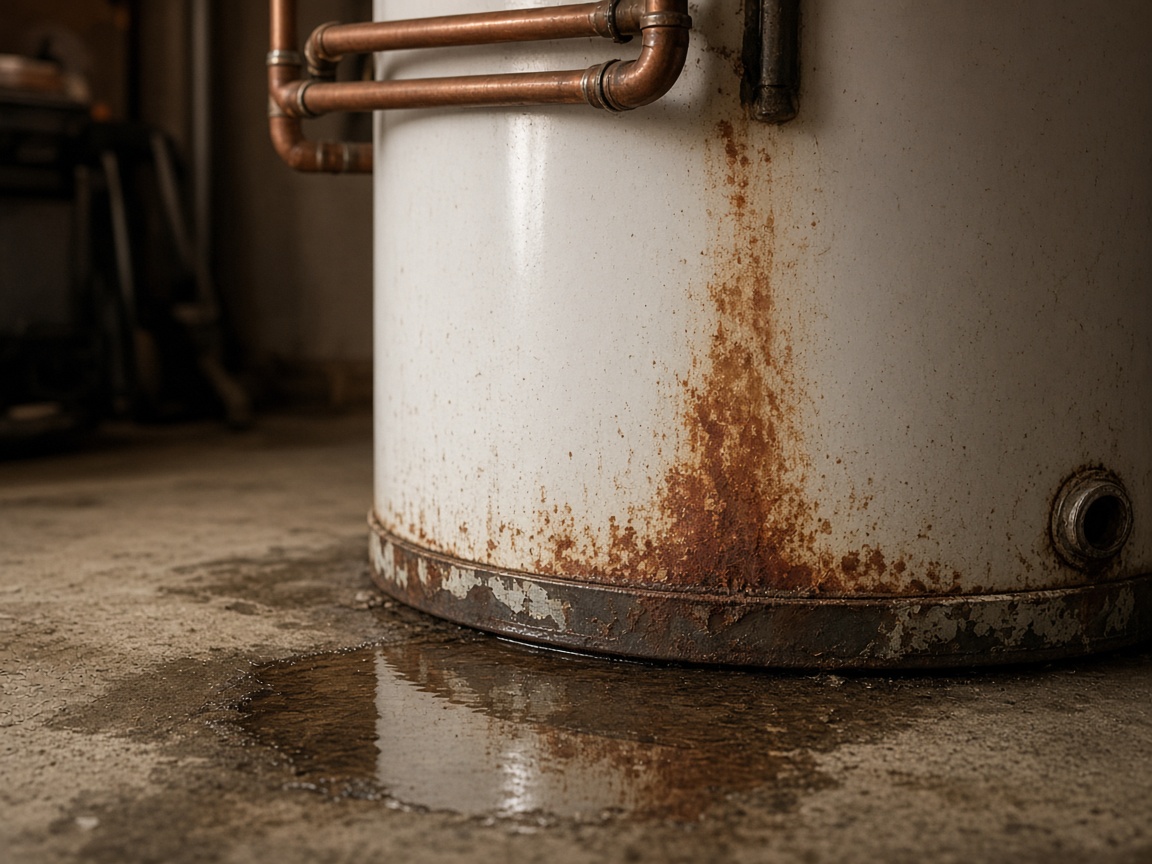
The first step in our diagnostic protocol is determining whether the tank's internal pressure vessel has breached or if a peripheral component has failed. If water pools directly under the center of the tank jacket with rust or mineral discoloration, the internal porcelain enamel glass lining has cracked, allowing water to corrode the structural steel. A ruptured inner tank cannot be welded or patched—it requires complete system replacement.
Conversely, clear water pooling on the top of the heater usually indicates corroded dielectric nipples, deteriorated rubber washers inside stainless steel flex connectors, or loose copper compression fittings. In coastal areas like South Beach, salt marine air aggressively attacks dissimilar metals, causing rapid galvanic corrosion that our technicians resolve with heavy-duty dielectric unions.
Be aware of humidity-induced condensation: During hot, humid Florida summer afternoons, incoming groundwater at 72°F entering an unconditioned 95°F garage can cause moisture to condense across the entire tank jacket. Our technicians use thermal imaging and moisture meters to verify whether your tank is sweating or experiencing an active seam fracture.
Key Service Guarantees
| Leak Location | Visual Clues | Underlying Cause | Required Solution |
|---|---|---|---|
| Base of the Tank Jacket | Brown, rusty water puddling under the center of unit | Internal glass lining cracked; steel tank corroded through | Complete Water Heater Replacement |
| Top Inlet / Outlet Nipples | Green/white crusty corrosion, drips from flex lines | Galvanic corrosion, failed washers, or cracked dielectric | Replace nipples & flex connectors with brass fittings |
| T&P Relief Valve | Steady trickle or intermittent discharge from side pipe | Excessive temperature (>210°F) or house pressure (>80 PSI) | Test thermal expansion tank, pressure regulator, or valve swap |
| Lower Drain Cock | Dripping from plastic valve threading at tank bottom | Mineral sediment jamming plastic seal or stripped threads | Replace with heavy-duty full-port brass drain valve |
| Element Access Panel | Water trickling from behind upper or lower electrical covers | Deteriorated element rubber gasket or tank weld crack | Replace heating element gasket or condemn tank if seam split |
Follow these 4 safety containment steps to minimize structural water damage to your Vero Beach home.
Locate the shutoff valve on the cold water pipe entering the top right of the tank. Turn it clockwise until it stops. If seized, shut off the main house supply valve near your front hose bib or water meter.
For electric heaters, switch off the breaker labeled 'Water Heater' at your main electrical panel. For gas heaters, rotate the thermostat knob to 'OFF'. Never walk through standing water to access electrical panels.
Open the hot water tap in a laundry sink or bathtub. This vents remaining hydraulic pressure through the faucet spout rather than forcing more water through the leak.
Move cardboard boxes, power tools, and laundry away from the water heater perimeter. Photograph the water spread for insurance documentation if needed.
Streamlined Protocol
01
Call (772) 555-0140 with your Vero Beach street address, fuel type (electric or gas), and leak status. We triage immediate flood containment over the phone.
02
A fully equipped water heater service truck is dispatched to your Vero Beach home or business within 45 to 60 minutes for active emergency calls.
03
Our technician inspects the tank shell, fittings, elements, and pressure relief valve, providing an exact, upfront written price before any work begins.
04
We complete the repair or full replacement, test all connections, verify Indian River County code compliance, haul away the old unit, and leave the workspace spotless.
Local FAQ
Clear, factual guidance for Indian River County homeowners.
Yes. Because residential water heaters remain connected to the municipal water supply under 50 to 70 PSI, an unaddressed leak can rapidly progress into a full seam burst, flooding your garage or living area with hundreds of gallons.
No. Residential water heaters are glass-lined steel pressure vessels. Once rust corrodes through the outer steel jacket, welding cannot withstand thermal expansion and hydraulic pressure. Safety standards require full replacement.
That is the Temperature & Pressure (T&P) relief discharge tube. It drips when water temperature exceeds 210°F or water pressure exceeds 150 PSI. It usually indicates a failed expansion tank, high street pressure, or an overheating element. Never plug this pipe.
Most homeowner policies cover water damage resulting from sudden water heater leaks, but typically exclude the cost of the replacement water heater itself. We provide itemized receipts to simplify claims.
Need help now?
Have the street, the ZIP, and whether the tank is gas or electric.