Key takeaways
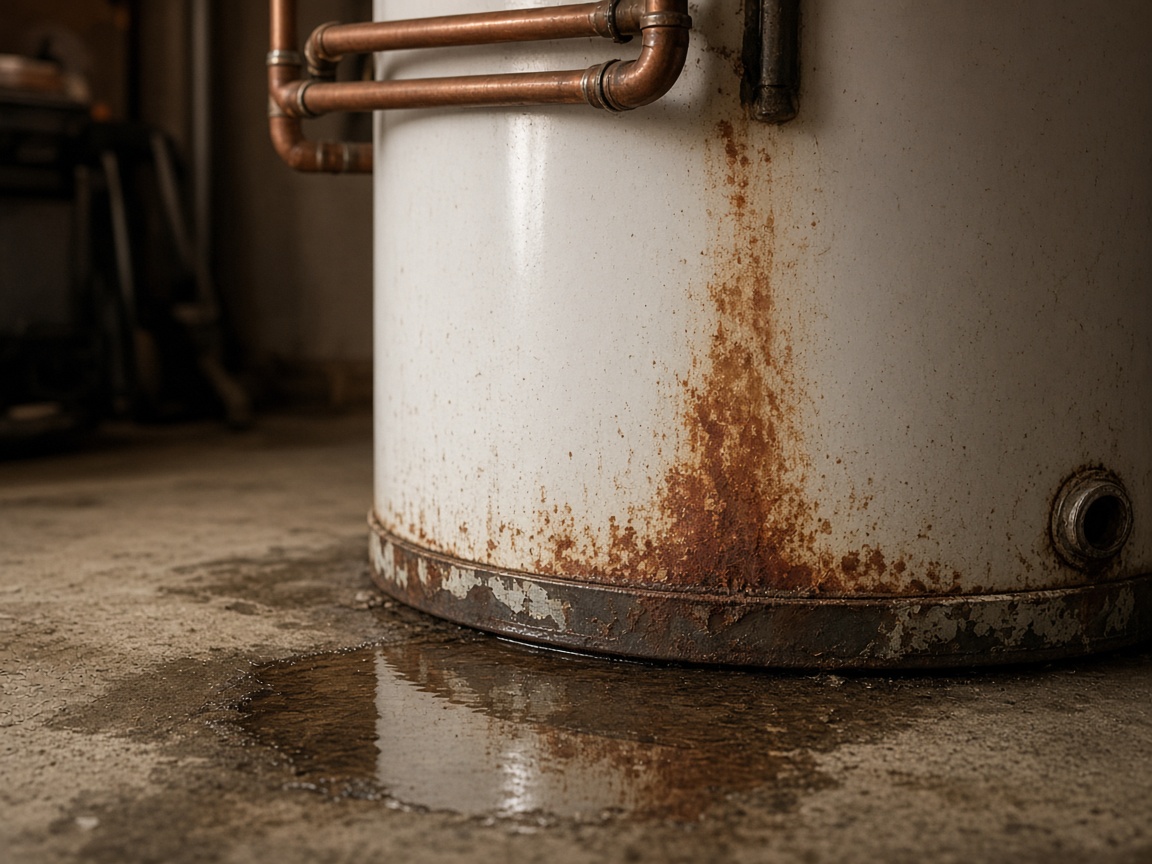
- Water at the base is one of three things: a drain valve, a fitting, or the tank wall.
- A shell leak is a replacement. Tightening the drain valve is not a fix for rust in the middle.
- On a slab, bottom water has nowhere to go but across the floor.
- Sweat on the whole jacket is not the same as a stream at one point.
Where the water actually starts
Get a dry towel and wipe the base. Watch for one minute while the heater is idle, then again while it heats. The first wet point is the diagnosis.
A drip at the small valve near the floor is the drain. A drip at a threaded fitting where pipe meets tank is a nipple or union. Water that appears from under the insulation, with rust, is the steel.
That third one is why bottom leaks scare people. The replacement page is the visit. The repair page is the first two.
Three bottom sources
| Wet spot | Likely part | Usual outcome |
|---|---|---|
| The little hose-bib at the bottom | Drain valve | Repair if the shell is sound |
| Threads where the pipe enters | Nipple or dielectric union | Repair if the tank wall is dry |
| Rust bloom under the jacket, center bottom | Tank wall | Replacement |
| Film on the whole tank after a shower | Condensation | No part to change |
Do not lay a bead of sealant on a rust hole. The hole is the end of the steel, not a seam you can glue.
Why slab houses show this faster
A basement heater can drip into a floor drain for a day before anyone notices. A Vero Beach garage cannot. The water finds the door, the hall, or the drywall on the other side of the closet.
In Florida Ridge the heater is often in the garage. You see the puddle when you pull in. In a South Beach chase you may see the ceiling stain first, which means the leak started one floor up.
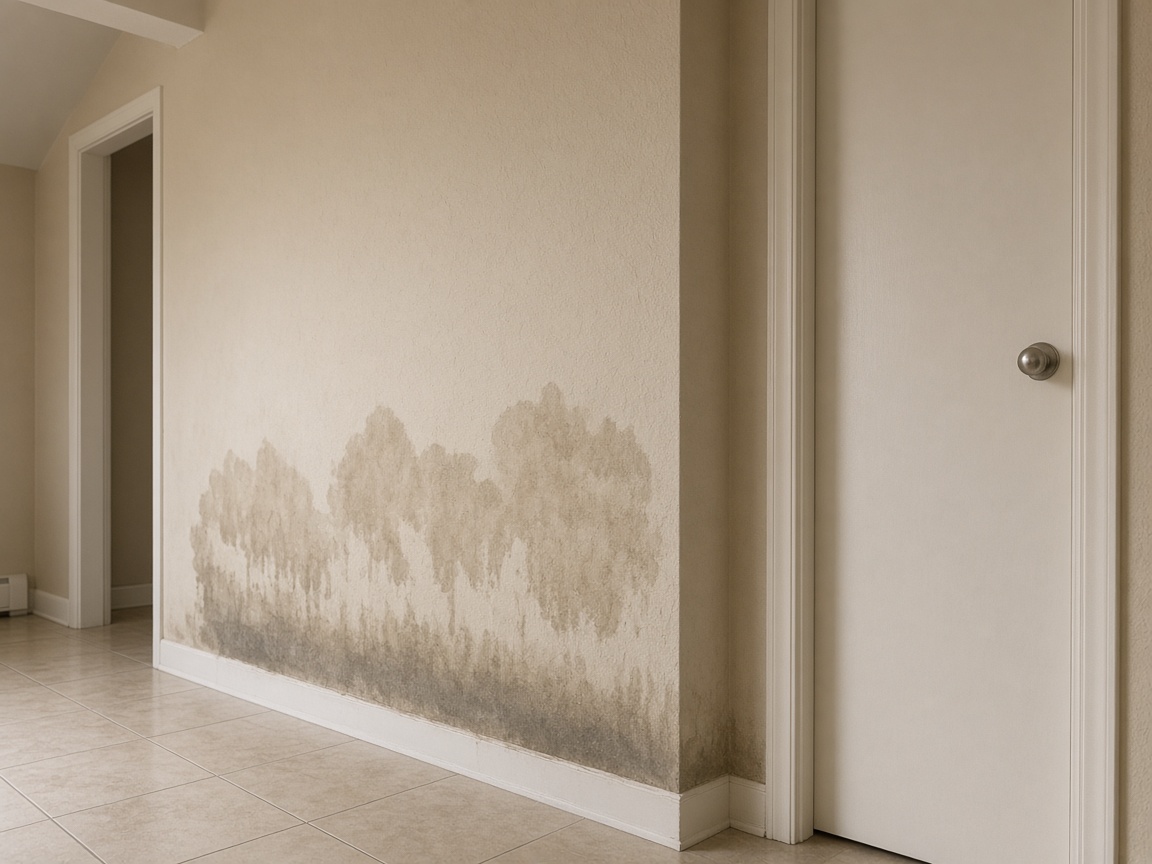
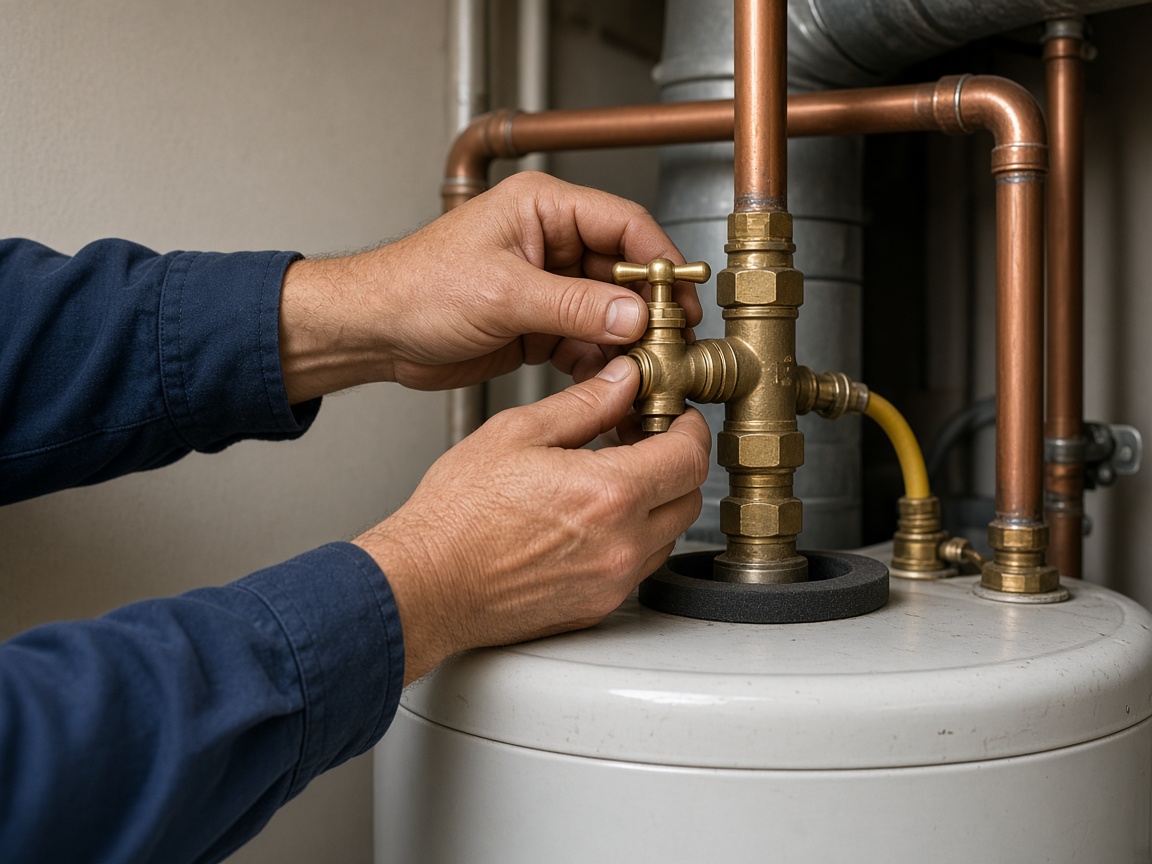
If the stain is already on the wall, the failing heater signs are past the early stage. Shut the inlet using the shutoff steps if the floor is still safe. A pan that is part of the puddle has its own notes in the overflowing pan guide.
What we tell you on site
We say repair or replace before we take the old tank apart. A drain valve on a sound shell is a small job. A shell leak means the new heater, the pan, and the connections.
You approve that price in the closet, with the wet spot in front of both of us. We do not guess it from a phone photo alone when the jacket is still on.
We pull enough jacket back to see steel. Foam that is wet only on the outside can be sweat. Foam that is rusty and soggy at the center bottom is the tank. That is the moment the job changes from a valve to a replacement, and you see it with us.
If the heater sits on a wood platform in a closet, we look at the platform too. Soft wood means the leak is older than this morning. We will not set a new tank on a sponge. The pan and a sound base are part of the same visit.
Drain-down happens after you approve the work. We run a hose to a safe spot, not across the hall carpet. On a slab garage the driveway is usually the safe spot. In a condo chase we ask where the building wants the water before we open the drain.
Bottom leaks rarely stay polite. A thread drip can sit for days. A shell leak speeds up as the steel opens. If you watched it go from a dime-sized spot to a trail toward the door, say that. The change in speed tells us the wall is failing, not a fitting that loosened.
We also check the hot outlet nipple. People stare at the floor and miss a leak that starts at the top and runs down the jacket. Wiping the top fittings is part of the same look. Water on the floor does not always begin on the floor.
After a replacement, the old tank leaves with us. We do not leave a rusted shell in the garage to keep dripping on the way to the curb. The pan under the new heater is empty when we go, and you know where the drain daylights. If that drain ends in a wall, we say so before we leave, because a hidden end is how the next drip becomes a stain.
Mark the edge of the wet spot with a piece of tape if the water is not still spreading. An hour later the tape tells you whether the leak is active. A spot that grew past the tape is not leftover wash water from a mop. A spot that stalled may be what you already wiped.
Do not stack towels against the base and leave for work. Towels hide growth and keep the steel wet. A dry view of a small drip is more useful to us than a pile of wet cloth and a story about how big it was at dawn.
When we replace a bottom-failed tank we also look at the shutoff that did not want to turn. A seized inlet is how the next leak becomes a bigger flood. If that valve is finished, it is part of the price you approve, not an add-on whispered at the end. You will see the old valve and the new one before we pack up.
Water on the floor?
Call with the street and the fuel type. You approve the price before we start.
Call (772) 555-0140Questions
Can I tighten the drain valve and stop a bottom leak?
Only if the drip is at the valve itself and the tank wall is dry. A rust stain under the jacket will not stop because the handle got another quarter turn. If rust is blooming under the foam, tightening is finished as an idea.
Is a little water at the bottom normal after a flush?
A few drops on the threads right after a flush can be leftover water. A new puddle an hour later is a leak. Wipe it once. If the same spot wets again with the hose off, it is not leftover flush water.
Should I wrap the bottom in a towel overnight?
A towel hides the leak and soaks the slab. Close the inlet if you can, and leave the spot visible so we can see where it starts. Leave the spot bare so we can see the start of the water when we arrive.
Does homeowner insurance cover a rusted tank?
That is between you and the policy. We document what failed. We do not promise a claim result. We will say what failed in plain words. The adjuster decides the rest.
Sources
Need help now?
Want this heater looked at?
Have the street ready. You approve the price before we start.